Private poker games operate on trust. Players trust that the cards are random, the dealer is honest, and the game is fair. That trust is exactly what makes private games vulnerable to operators who understand how to cheat at poker with the right equipment.
This article is written for private game operators, card room managers, and individuals who run regular poker nights and want to understand what technology is available, how it works, and how to select equipment that performs reliably under live conditions.
The Four Pillars of Modern Poker Cheating
Forget card palming, false shuffles, and bottom dealing. Those techniques belong to a different century. Modern poker cheating runs on four technological pillars:
- Marked Cards — the information layer
- Scanner Cameras — the capture layer
- Poker Analyzers — the processing layer
- Output Devices — the delivery layer
Each layer must work perfectly with the others. A weakness in any one link breaks the entire chain.
Step 1: The Marked Deck
Everything starts with marked cards. The best-marked decks use barcode edge marking—microscopic barcodes printed along the card edges that are invisible to the naked eye but read instantly by scanner cameras. These cards look and feel identical to standard casino-grade decks (Bicycle, Copag, Bee, Modiano) because they are the same cards, just with the marking layer added during a secondary printing pass.
Alternative marking methods include luminous ink (visible only through infrared lenses) and laser etching (detectable only by specialized cameras). Barcode edge marking is the current industry standard because it offers the fastest scan time and the lowest detection risk.
Step 2: The Scanner Camera
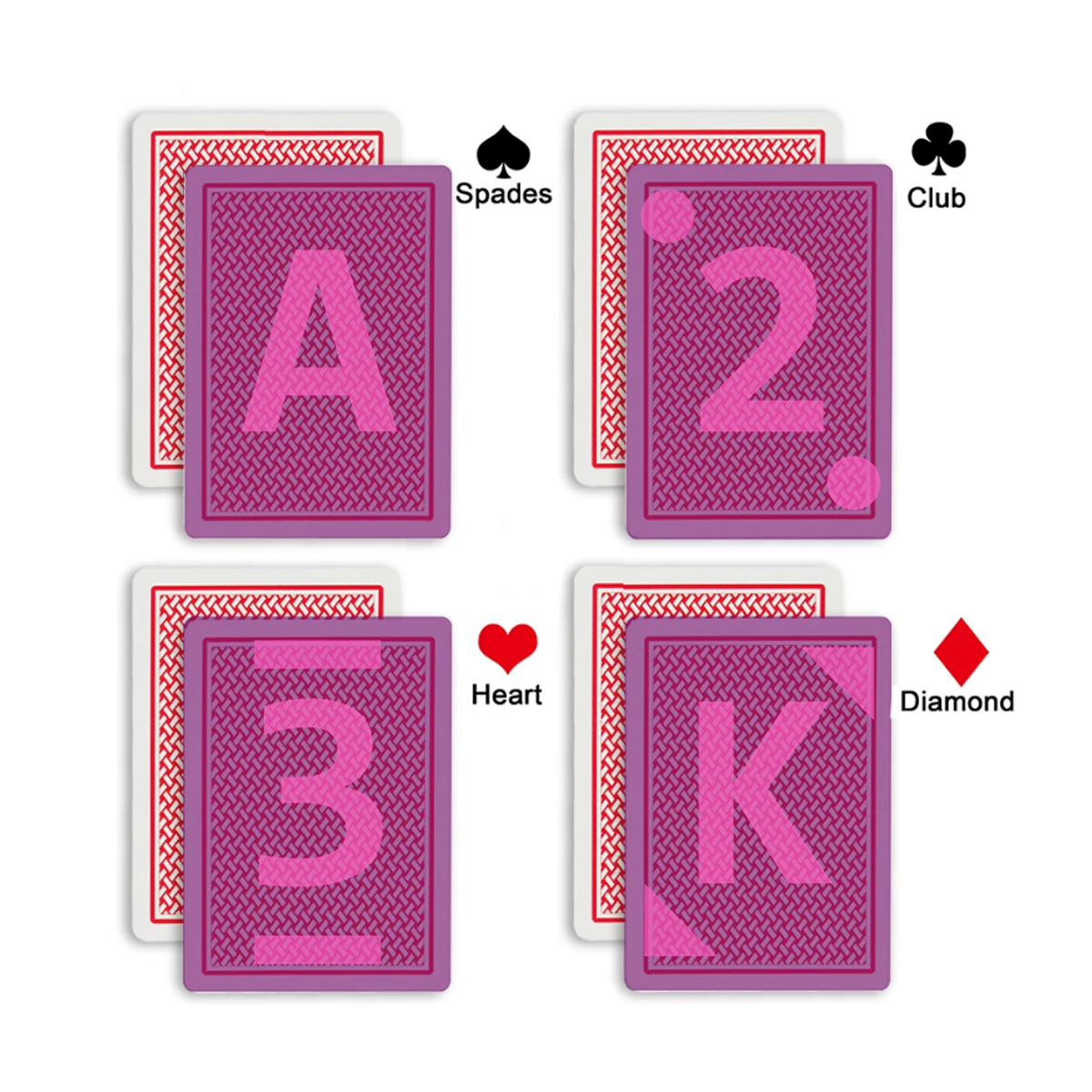
The scanner sits somewhere near the table—disguised as a shirt button, a watch, a power bank, a lighter, or a water bottle. Its job is to capture the barcode patterns on the marked cards as they are dealt or spread, then transmit the data to the analyzer phone via Bluetooth.
Camera placement is everything. A scanner that is too far from the cards produces unreadable footage. Too close, and someone notices. The sweet spot is 1-3 meters with a clear, unobstructed sightline to the center of the table.
Step 3: The Poker Analyzer
The analyzer is a modified smartphone running specialized software (CVK 600, CVK 680, AKK series, PK-King, or similar). It receives the camera feed, decodes the barcode data to identify each card, compares the known cards against all possible opponent holdings, and calculates:
- Win probability for each player at the table
- Recommended bet sizing based on pot odds
- Which cards to hold and which to fold
- Real-time equity percentages updated after each street
The CVK 600 is currently the most widely used model in private games worldwide. It scans cards in 0.5 seconds and delivers results to the player via wireless earpiece. The CVK 680 adds a dedicated Omaha odds calculator module for operators running PLO games.
For a deeper dive into analyzer technology, see our guide on CVK 600 Troubleshooting: Common Problems and How to Fix Them Fast.
Step 4: The Output Device
The final link is how the player receives the information. Three options:
- Wireless earpiece: A micro-speaker that fits entirely inside the ear canal. The analyzer speaks results through a synthetic or pre-recorded voice. Invisible to anyone standing more than 30cm away.
- Vibration device: A small buzzer worn against the skin that pulses in coded patterns (one pulse = bet, two pulses = fold, etc.). Silent and undetectable.
- Secondary screen: A second phone displaying results. Requires the player to glance at the screen periodically. Higher detection risk but useful when audio or vibration is impractical.
Common Mistakes Operators Make
Mistake 1: Winning too fast. A player who wins 85% of showdowns over two hours will be asked to leave, not invited back. Set your analyzer to recommend folding some winning hands to maintain a natural-looking win rate of 55-65%.
Mistake 2: Skipping the dress rehearsal. Every piece of equipment works in a test environment. The question is whether it works when the room is full, phones are everywhere, and someone spills a drink on the table. Run a full-system test in game-like conditions before you go live.
Mistake 3: Using cheap marked cards. Cards that feel thinner, heavier, or rougher than standard decks get noticed immediately. Always use brand-name cards (Bicycle, Copag, Bee) with the marking layer applied by the factory.
Learning how to cheat at poker with modern equipment is not about sleight of hand. It is about assembling a reliable technological system and operating it with discipline. The operators who succeed are the ones who treat this as a serious investment, not a party trick.